
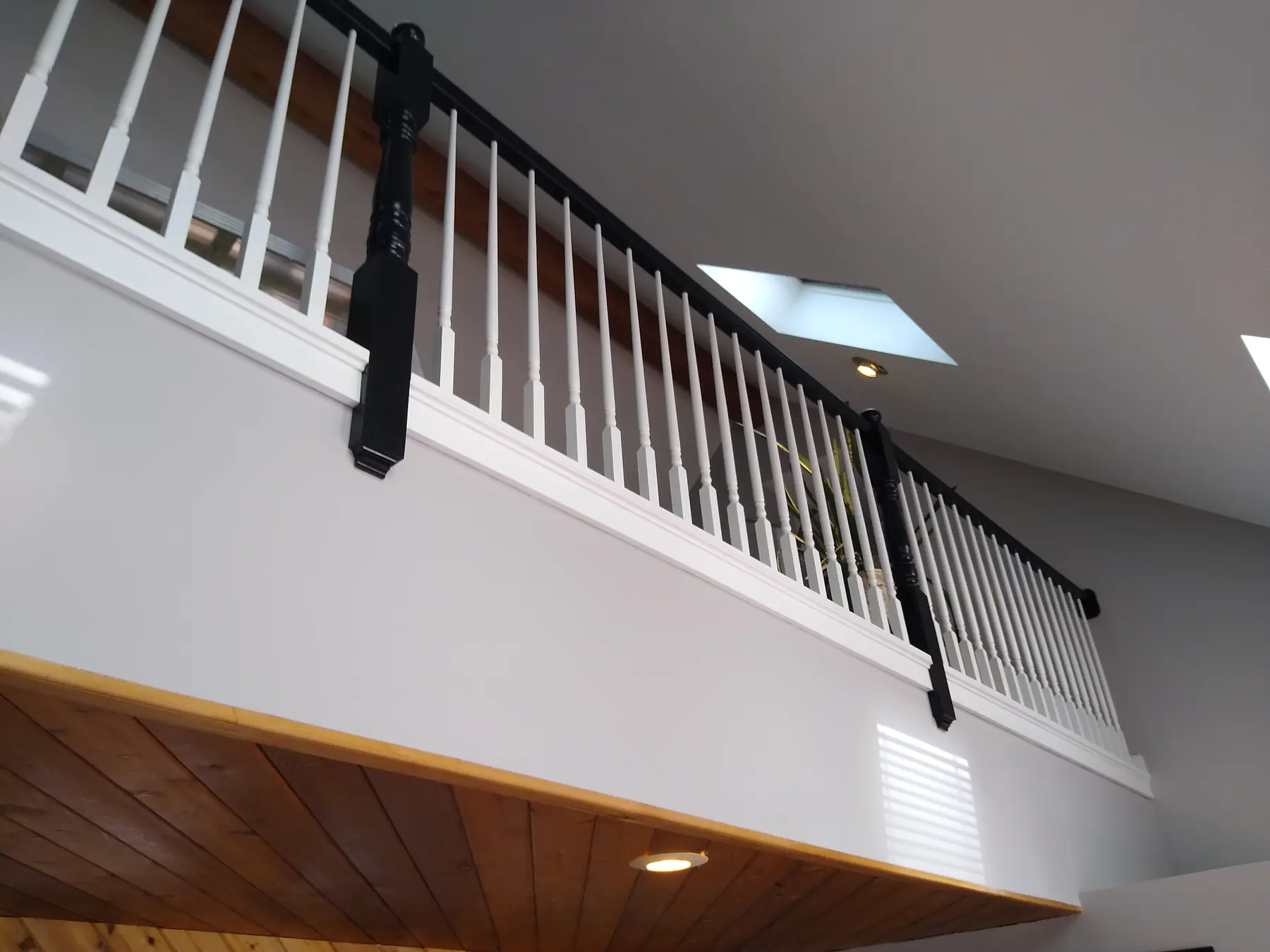
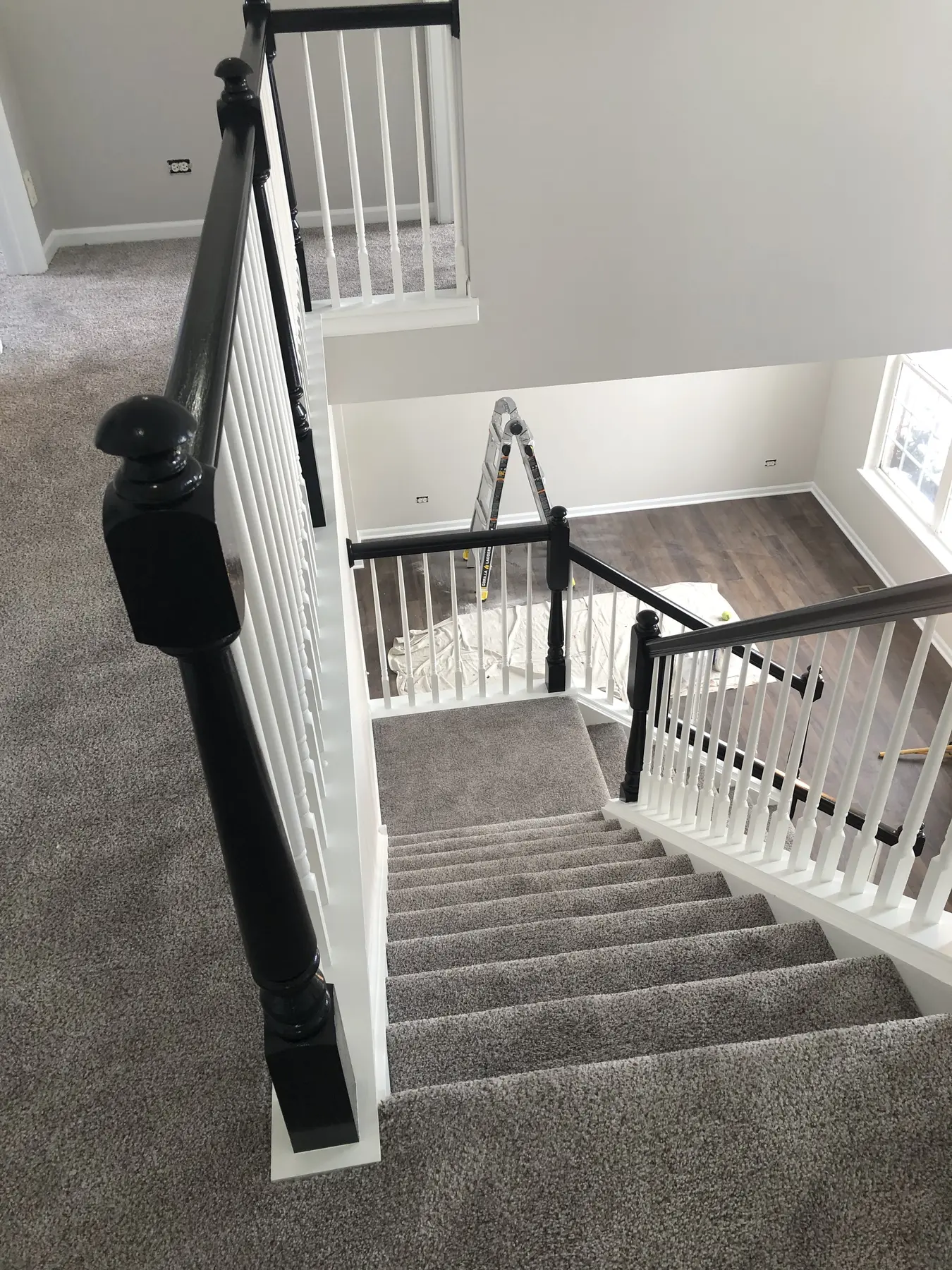
Finished bannister and staircase images labeled Vernon Hills.
Railings, bannisters, posts and spindles
Staircase Railing Painting & Refinishing Without a Full Rebuild
Honeybear Painting transforms dated wood railings through a deliberate sequence of sanding, masking, bonding primer, enamel, and gel stain. The goal is crisp separation between spindles, posts, rails, walls, and flooring.
Family-owned · Fully insured · Free estimates
Update the parts of the staircase you see every day
The estimate separates painted spindles and posts from stained or enameled handrails and other high-contact surfaces.
- 01Lightly sand bare wood and remove dust before priming or staining.
- 02Mask walls, flooring, carpet edges, spindle tops, and rail transitions as the design requires.
- 03Prime bare oak sections that will receive a painted finish.
- 04Paint spindles, base trim, posts, and rails in the selected scheme.
- 05Apply gel stain to designated rails or posts when that finish is chosen.
- 06Complete final cross-color touch-ups after tape removal.
What matters before the work starts
Sanding, masking, bonding primer, enamel, gel stain and cure time are planned around the exact staircase.
Honeybear published a detailed staircase process with surface, primer, coating-order, masking, and curing guidance.
The process treats high-contact rails differently from lower-contact painted components.
Honeybear contains labeled before, in-process, and finished staircase images.
Completed Honeybear work
A documented Vernon Hills staircase project
See the before, preparation and finished stages.
A before image and two process/result images for the bannister transformation.
Staircase painting questions
Which staircase parts can be painted or stained?
Honeybear's current work covers bannisters, handrails, posts, spindles, and base trim. The design can separate light and dark components.
Does bare oak need to be sanded first?
Yes. Honeybear's published process lightly sands bare oak and removes the dust before applying bonding primer to sections that will be painted.
Why use bonding primer on a staircase?
The current article emphasizes adhesion on smooth wood and identifies a strong bonding primer as a key step for painted bare-oak components.
How are crisp lines created at the spindle tops?
The documented method tapes each spindle top and also masks where rails meet walls and posts meet the base, followed by final touch-ups.
How long should a newly finished railing cure?
Honeybear's article advises gentle use for roughly 14 to 21 days while staircase enamels and stains cure. Exact guidance should follow the products used on your project.
Can I read the detailed staircase method?
Yes. Honeybear’s staircase article explains its Lindenhurst process from sanding and masking through primer, enamel, gel stain, and curing.
Products used for painted and stained parts
Zinsser BONDZ or Sherwin-Williams Extreme Bond
Honeybear's staircase article names these as bonding-primer options for bare oak that will be painted.
Sherwin-Williams ProClassic or Benjamin Moore Advance Enamel
The staircase article names these as finish options for the painted light-color sections.
Minwax oil-based Gel Stain
The article documents three controlled coats on black posts and rails in a Lindenhurst project.
Tack cloth
The article specifies it for dust removal after lightly sanding bare oak.
Have a staircase railings, bannisters & posts project in mind?
Call Honeybear Painting or request a free estimate.